Debt Management & Credit
Debt Consolidation Loan vs. Balance Transfer Card: Which Saves You More in 2026?
Debt consolidation vs balance transfer: compare 2026 interest rates, fees, and real payoff math to see which option saves you more on high-interest debt.


Choosing between debt consolidation vs balance transfer can save you thousands of dollars over the life of your payoff plan — or cost you more if you pick the wrong tool. Americans are carrying $1.252 trillion in credit card debt as of the first quarter of 2026, according to the Federal Reserve Bank of New York, and the average credit card APR sits between 21% and 24% depending on the source. With rates that high, a growing number of borrowers are turning to two competing strategies: a fixed-rate debt consolidation loan or a 0% intro APR balance transfer card. Both can cut your interest cost dramatically, but they work very differently, and the right choice depends on your balance, your credit score, and how fast you can realistically pay it off.
What Is a Debt Consolidation Loan?
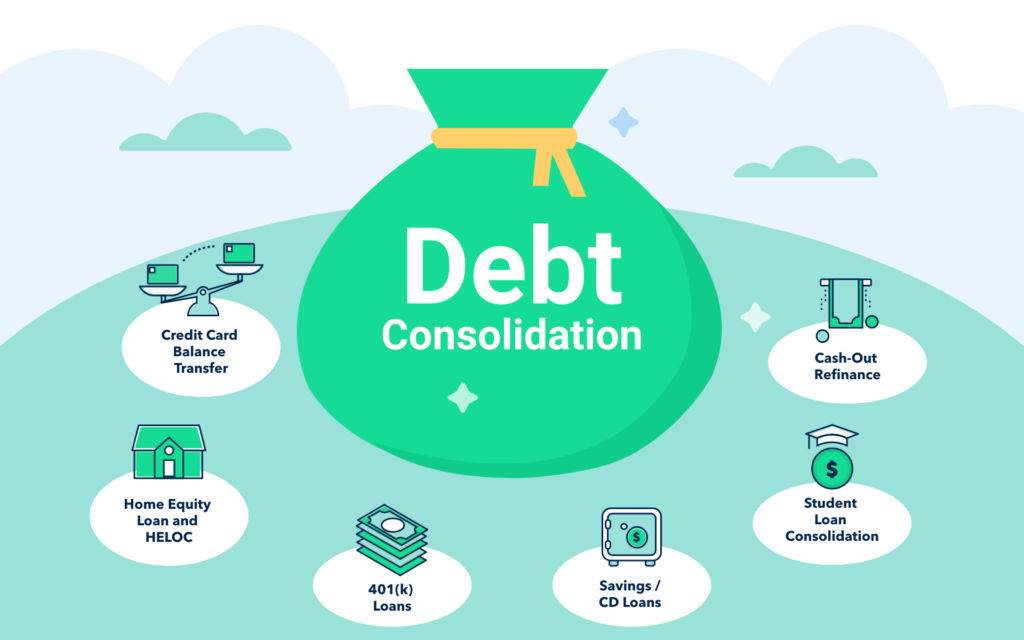
A debt consolidation loan is a fixed-rate personal loan you use to pay off multiple high-interest debts at once, leaving you with a single monthly payment. As of mid-2026, the average personal loan interest rate is around 11.4% to 12.3% for borrowers with good credit, according to Bankrate and Credible. Rates vary by term: Credible marketplace data shows average rates of 13.91% for 3-year loans and 17.82% for 5-year loans, while a 2-year term averages closer to 11.86% per Federal Reserve data. Because the rate and term are locked in at approval, your payoff date and total interest cost are predictable from day one.
What Is a Balance Transfer Card?
A balance transfer card lets you move an existing high-interest balance onto a new card that offers 0% introductory APR, typically for 15 to 21 months. In 2026, top offers include the Citi Simplicity Card (18 months at 0% on transfers), the Citi Diamond Preferred Card (21 months), and BankAmericard (21 billing cycles). The catch is the transfer fee, usually 3% to 5% of the amount moved — on a $6,000 balance, that’s $180 to $300 charged up front. If you don’t clear the balance before the promotional period ends, the remaining amount reverts to the card’s standard APR, which can be just as high as the debt you started with.
Debt Consolidation vs. Balance Transfer: Rates and Fees Compared
- Interest rate: Consolidation loans average 11.4%–17.8% fixed; balance transfer cards offer 0% for a limited window, then jump to a standard card APR (often 20%+).
- Upfront fees: Consolidation loans may carry origination fees (0%–8%); balance transfer cards charge 3%–5% of the transferred amount.
- Credit score needed: Both typically require good-to-excellent credit (670+) for the best rates and longest 0% windows.
- Repayment structure: Loans have a fixed term and fixed payment; cards require you to self-manage payoff before the promo period ends.
- Best for: Loans suit larger balances or slower payoff timelines; cards suit smaller balances you’re confident you can clear within 12–21 months.
Which Saves You More? A $6,000 Example
Say you’re carrying $6,000 in credit card debt at a 22% APR. A balance transfer to an 18-month 0% card with a 3% fee costs $180 upfront; if you pay $333/month and clear it within the promo window, your total cost is just that $180 fee — no interest at all. A debt consolidation loan at 12% APR over 3 years costs roughly $199/month and about $1,164 in total interest. For this balance and timeline, the balance transfer wins on cost — but only if you can realistically pay it off before the 0% period expires. If you’d need longer than 18–21 months, or your balance is larger (say $15,000+), a fixed-rate loan avoids the risk of the rate snapping back to 20%+ before you’re done. You can compare this against other debt payoff methods to see which prioritization strategy fits your full debt picture, not just one balance.

Pros and Cons of Each Option
Debt Consolidation Loan
- Pro: Fixed rate and fixed payoff date, no risk of rate reversion.
- Pro: Works for large balances that can’t be cleared in 12–21 months.
- Con: Rates are higher than a true 0% promo period.
- Con: May include an origination fee deducted from your loan proceeds.
Balance Transfer Card
- Pro: Genuinely free financing if paid off within the promo window.
- Pro: Lower upfront cost than most loan origination fees.
- Con: Interest rate jumps sharply once the intro period ends.
- Con: Transfer limits are usually capped at your new card’s credit limit.
Which Option Is Right for You?
If your balance is modest, your credit qualifies you for a long 0% promo, and you can pay it off within that window, a balance transfer card is typically the cheapest route. If your debt is larger, your payoff timeline stretches beyond 21 months, or you simply want the certainty of a fixed payment, a debt consolidation loan is the safer bet. Either way, pair whichever tool you choose with a clear repayment plan; for tactics that speed up either path, see our guide on how to pay off credit card debt fast.
For the latest national debt figures referenced in this article, see the Federal Reserve Bank of New York’s Household Debt and Credit Report.
Frequently Asked Questions
What’s the main difference between debt consolidation and a balance transfer?
A debt consolidation loan is a fixed-rate installment loan that pays off multiple debts at once. A balance transfer moves existing credit card debt to a new card with a temporary 0% APR offer.
Does a balance transfer hurt your credit score?
Opening a new card causes a small, temporary dip from the hard inquiry, but paying down revolving balances usually improves your credit utilization ratio within a few months.
Can you consolidate debt with bad credit?
Yes, but expect a much higher rate — often 25%–36% — or you may need a co-signer or secured loan. Nonprofit credit counseling and debt management plans are worth exploring first.
What happens if I don’t pay off my balance transfer in time?
Any remaining balance starts accruing interest at the card’s standard purchase or penalty APR, which is often 20% or higher, erasing the savings the transfer was meant to create.
Is a personal loan or balance transfer card better for large debt?
For balances above your card’s credit limit or that need more than 21 months to repay, a fixed-rate personal loan is usually the safer and more predictable option.
Do debt consolidation loans hurt your credit score?
There’s a short-term dip from the credit check, but scores often recover and improve over time as revolving credit card balances drop and payment history stays on track.
Can I use a balance transfer and a personal loan together?
Yes. Some borrowers transfer what fits within a 0% limit and use a consolidation loan for the remainder, though managing two payoff timelines requires careful tracking.
What credit score do I need for a 0% balance transfer card?
Most top balance transfer cards require good to excellent credit, generally a FICO score of 670 or higher, to qualify for the longest 0% promotional periods.
Are there alternatives to consolidation loans and balance transfers?
Yes — nonprofit debt management plans, home equity loans for homeowners, and the debt snowball or avalanche methods using your existing accounts are all viable alternatives.
How much can I actually save with debt consolidation vs balance transfer?
On a $6,000 balance, a paid-off-in-time balance transfer can cost as little as $180 in fees, versus roughly $1,164 in interest on a 3-year, 12% consolidation loan — savings depend entirely on payoff speed.