How To Invest
Dollar-Cost Averaging Explained With Examples
Dollar-cost averaging is one of the most popular ways to invest consistently, but the research on whether it beats investing a lump sum all at once may surprise you.

Dollar-cost averaging is one of the most widely recommended investing strategies, especially for beginners. But the actual academic research on whether it outperforms investing a lump sum all at once may surprise you, since the mathematics and the psychology of investing often point in different directions.
Here is what dollar-cost averaging actually means, how it works with real examples, and what decades of research say about when it helps and when it does not.
What Is Dollar-Cost Averaging?
Dollar-cost averaging, often abbreviated as DCA, means investing a fixed amount of money at regular intervals, such as monthly or biweekly, regardless of whether the market is up or down. Rather than trying to time the perfect moment to invest, you buy more shares when prices are low and fewer shares when prices are high, which averages out your purchase price over time.
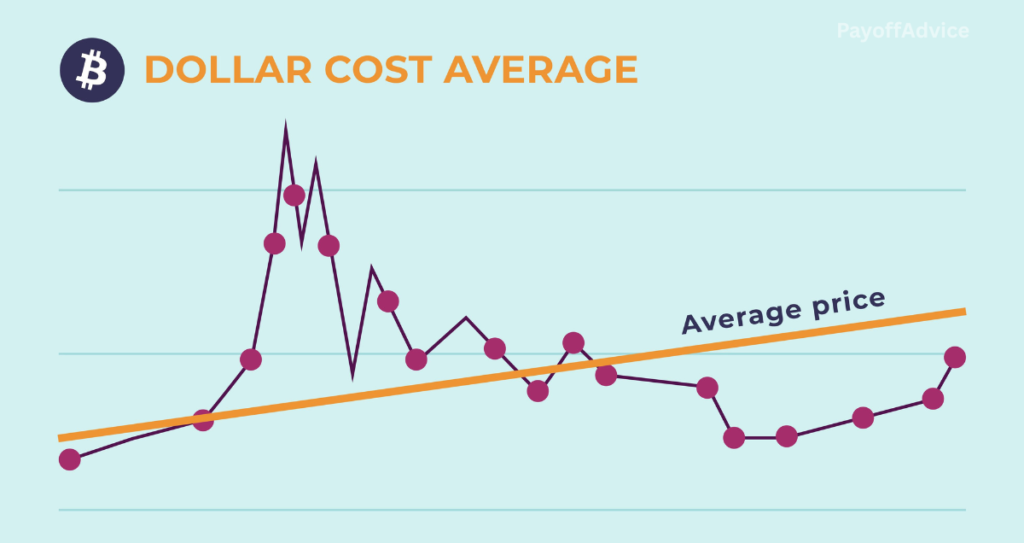
A Simple Dollar-Cost Averaging Example
Imagine you invest $200 a month into an index fund for three months. In month one, the fund is priced at $50 a share, so you buy 4 shares. In month two, the price drops to $40, so your $200 buys 5 shares. In month three, the price rises to $50 again, buying you 4 shares. You end up with 13 shares for $600, an average cost of about $46.15 per share, lower than the $50 price in two of the three months, purely because you kept buying consistently through the dip.
What the Research Actually Shows
According to Vanguard Research, one of the most cited studies on this topic, lump-sum investing has historically outperformed 12-month dollar-cost averaging roughly two-thirds of the time across U.S., U.K., and Australian markets, with lump-sum investing generating about 2.3 to 2.4 percentage points higher average returns over the deployment year. Earlier academic work by Constantinides in 1979, and later confirmed by other researchers, mathematically demonstrated that DCA is generally suboptimal for money you already have sitting in cash, since delaying investment exposes you to the opportunity cost of missed market growth.
Why DCA Still Makes Sense for Most People
This research specifically applies to situations where you already have a lump sum, such as an inheritance or bonus, sitting in cash and are deciding whether to invest it all at once or spread it out. It does not apply to investing your regular paycheck as you earn it, which is simply investing what you have when you have it, not a deliberate delay. For most people building wealth from ongoing income, DCA is not really a choice, it is the only realistic option, since you do not have a large lump sum to deploy all at once.
When Dollar-Cost Averaging Actually Outperforms
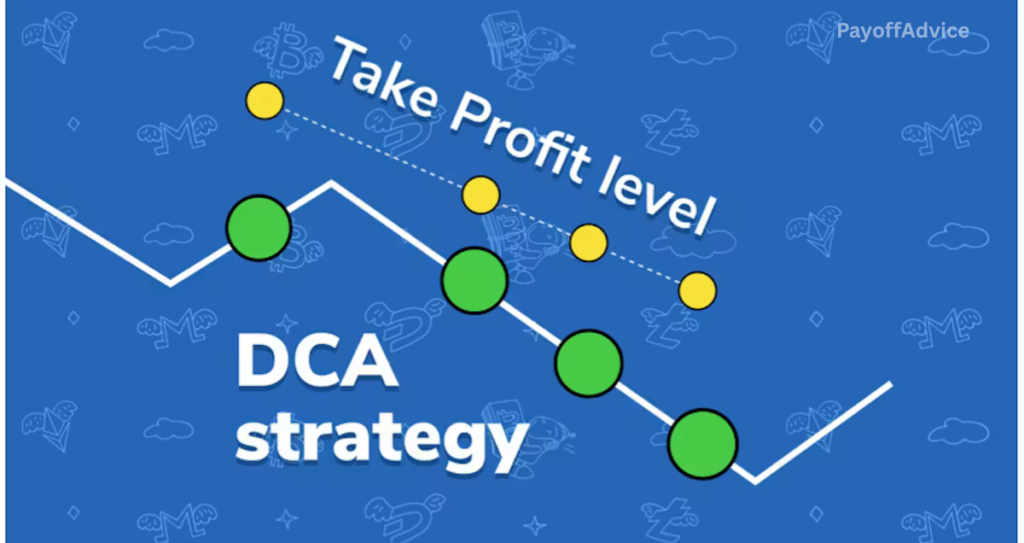
DCA has historically performed better than lump-sum investing during sustained market declines. Investors who continued dollar-cost averaging through downturns like 2008, the 2000 to 2002 dot-com crash, or the 2020 pandemic decline bought shares at progressively lower prices, positioning themselves for stronger returns during the recovery that followed. If you can predict a downturn is coming, DCA would help, but since reliably predicting market drops is extremely difficult even for professionals, this benefit mostly shows up in hindsight.
The Psychological Case for Dollar-Cost Averaging
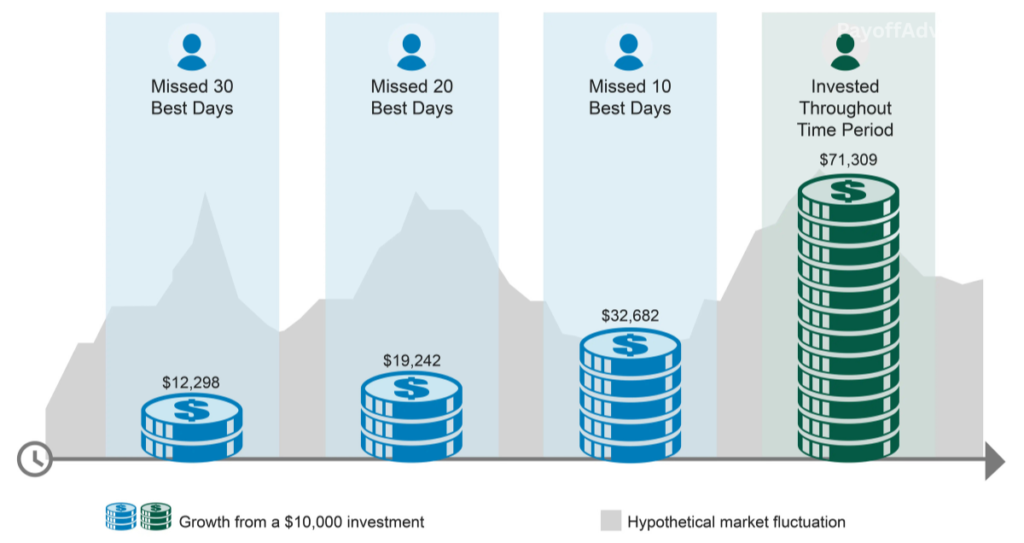
Even though lump-sum investing wins more often mathematically, dollar-cost averaging significantly reduces short-term volatility exposure and the emotional difficulty of investing a large amount right before a potential downturn. Research on investor behavior consistently shows that many people who commit to lump-sum investing panic and sell at exactly the wrong time when markets drop, which can erase any theoretical mathematical advantage. A strategy you can actually stick with often outperforms a theoretically optimal strategy you abandon under stress.
Dollar-Cost Averaging With Your Regular Paycheck
The most common and practical form of DCA for most people is simply automating investment contributions from every paycheck into a retirement account or brokerage account. Our guide on investing with your first paycheck covers how to set this up from the very start of your career.
How to Decide Between DCA and Lump Sum
If you have a large lump sum and a high risk tolerance, the research suggests investing it immediately generally produces better average returns. If you have lower risk tolerance, are investing right before a period you expect could be volatile, or know that watching a large lump sum drop in value would cause you to panic-sell, spreading it out over 6 to 12 months is a reasonable compromise, even if it sacrifices some average return.
Combining DCA With a Broader Strategy
Dollar-cost averaging works especially well alongside low-cost, diversified investments like index funds or ETFs, since you are not trying to pick individual winning stocks at the perfect moment, just steadily building a diversified position over time. Our guide on starting to invest with less than $100 covers how to begin this kind of consistent, small-amount investing.
Final Thoughts
Dollar-cost averaging is not mathematically optimal for a lump sum already sitting in cash, with lump-sum investing outperforming roughly two-thirds of the time historically. But for the vast majority of people investing out of their regular paycheck, DCA is simply how consistent, long-term investing works in practice, and its psychological benefits often outweigh the modest average return sacrifice for anyone deploying a large lump sum.
Frequently Asked Questions
1. What is dollar-cost averaging?
It is the practice of investing a fixed amount of money at regular intervals, regardless of market conditions, rather than trying to time your investments perfectly.
2. Does dollar-cost averaging beat lump-sum investing?
Historically, no; Vanguard Research found lump-sum investing outperformed 12-month DCA roughly two-thirds of the time across major markets.
3. When does dollar-cost averaging perform better?
DCA has historically performed better during sustained market declines, since it allows investors to buy shares at progressively lower prices during a downturn.
4. Is investing my paycheck each month considered dollar-cost averaging?
Yes, in practice it functions the same way, though it is not a deliberate delay of an existing lump sum, it is simply investing income as you receive it.
5. Why would someone choose DCA even if lump sum performs better on average?
DCA reduces short-term volatility exposure and can prevent the panic-selling that sometimes happens when a large lump-sum investment drops in value shortly after being deployed.
6. How much does lump-sum investing typically outperform DCA by?
Vanguard’s research found lump-sum investing outperformed 12-month DCA by an average of about 2.3 to 2.4 percentage points over the deployment year.
7. Is DCA a good strategy for beginners?
Yes, especially when combined with automated contributions into diversified funds, since it removes the pressure of trying to time the market.
8. Should I use DCA for an inheritance or bonus?
If you have high risk tolerance, investing it as a lump sum has historically produced better average returns, though DCA remains a reasonable choice for lower risk tolerance.
9. What academic research supports lump-sum investing?
Constantinides in 1979, along with later researchers like Brennan, Solanki, Rozeff, and Milevsky, all reached similar conclusions about the mathematical suboptimality of DCA for existing lump sums.
10. Does DCA eliminate investment risk?
No, DCA reduces timing risk but does not eliminate market risk, and your investments can still lose value regardless of how you deploy your capital.