Investment and Assets
ETF vs Mutual Funds: Which Should You Choose?
ETFs and mutual funds both offer diversification, but they differ sharply on cost, taxes, and flexibility. Here is how to decide which one fits your portfolio in 2026.


ETFs and mutual funds both pool money from many investors into a diversified basket of stocks or bonds, but the structural differences between them meaningfully affect your costs, taxes, and flexibility. Choosing the wrong vehicle for your situation can quietly cost you thousands of dollars over a long investing horizon.
Here is how ETFs and mutual funds actually compare in 2026, and how to decide which fits your goals.
What Is an ETF?
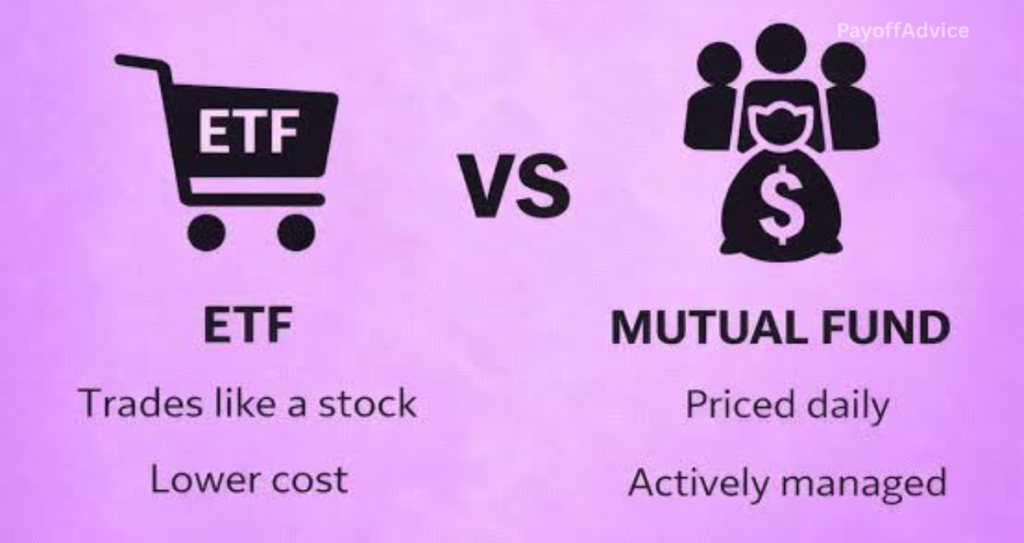
An exchange-traded fund, or ETF, trades on a stock exchange throughout the day just like an individual stock. You can buy or sell at any point during market hours, see the exact price you are paying in real time, and use tools like limit orders that are not available with mutual funds.
What Is a Mutual Fund?
A mutual fund is priced once per day, after markets close at 4 p.m. Eastern. If you place an order at noon, you will not know your actual purchase price until the market closes that day. Mutual funds cannot be bought or sold using limit orders or intraday strategies.
Comparing Costs: ETFs Generally Win
According to Morningstar data, the asset-weighted average expense ratio for index ETFs is around 0.14 to 0.16 percent, compared to roughly 0.36 to 0.44 percent for index mutual funds, and up to 0.66 to 1.02 percent for actively managed mutual funds. At the very top of the index fund market, the gap nearly disappears: Vanguard’s S&P 500 ETF charges 0.03 percent, almost identical to its mutual fund equivalent at 0.04 percent. The larger cost gap opens specifically at the actively managed fund level.
Watch Out for Mutual Fund Sales Loads
Beyond the ongoing expense ratio, many mutual funds still charge sales loads of 3 to 5.75 percent on purchases, along with up to 1 percent in annual 12b-1 marketing fees. ETFs generally do not carry either of these additional charges, though you may pay a small brokerage commission on each trade, typically a few dollars or often nothing on major platforms.
Tax Efficiency: A Significant ETF Advantage
Only about 5 percent of ETFs distributed capital gains in a recent full year, compared to 43 percent of mutual funds, according to industry fund data. This happens because mutual fund managers often need to sell underlying securities to raise cash for redemptions, triggering capital gains that get distributed to all remaining shareholders, even those who did not sell anything themselves. For taxable brokerage accounts, this difference can be worth 0.5 to 1.0 percentage points per year in after-tax returns, often exceeding the expense ratio gap itself.
When Mutual Funds Actually Win
Mutual funds have one clear practical advantage for a specific type of investor: if you are dollar-cost averaging with a fixed dollar amount, such as $500 a month, mutual funds let you invest every single dollar without leftover cash, since they support fractional dollar-based purchases natively. Many 401(k) plans are also structured around mutual funds rather than ETFs, making them the default option for workplace retirement accounts regardless of personal preference.
Trading Flexibility and Investor Behavior
ETFs offer intraday trading, but this can be a double-edged sword. For most long-term, buy-and-hold investors, the ability to trade throughout the day is not actually necessary, and it can make it easier to panic-sell during a stressful market swing mid-day. Mutual funds’ once-daily pricing removes that temptation somewhat, since you cannot react to intraday price movements.

How Costs Compound Over Time
The difference between a 0.20 percent and a 0.66 percent expense ratio may look small on paper, but compounded on a $100,000 portfolio over 30 years, it can amount to tens of thousands of dollars in lost returns. This is why cost matters more the longer your investment horizon is, making low-cost index ETFs particularly attractive for young, long-term investors. Our guide on dollar-cost averaging explained covers how consistent, low-cost investing compounds over time.
Which One Should You Choose?
If you are investing in a taxable brokerage account and want the lowest costs and best tax efficiency, low-cost index ETFs are generally the stronger choice. If you are contributing to a workplace 401(k) that only offers mutual funds, or you are dollar-cost averaging small, precise dollar amounts monthly, a low-cost index mutual fund remains a perfectly reasonable option. Our guide on investing with your first paycheck covers how to navigate whichever option your workplace plan offers.
Final Thoughts
At the lowest-cost index fund level, ETFs and mutual funds are nearly identical in price, and the choice often comes down to account type and trading convenience. Once you move into actively managed funds or taxable accounts, ETFs generally offer a meaningful cost and tax advantage, making them the default choice for most long-term investors building wealth outside of a workplace retirement plan.
Frequently Asked Questions
1. What is the main difference between ETFs and mutual funds?
ETFs trade throughout the day on an exchange like a stock, while mutual funds are priced once per day after market close.
2. Are ETFs cheaper than mutual funds?
Generally yes, especially for actively managed funds, though at the lowest-cost index fund level the difference is often negligible.
3. Do mutual funds have sales loads?
Many mutual funds charge sales loads of 3 to 5.75 percent, along with up to 1 percent in annual 12b-1 marketing fees, which ETFs generally do not carry.
4. Are ETFs more tax-efficient than mutual funds?
Yes, only about 5 percent of ETFs distributed capital gains in a recent year compared to 43 percent of mutual funds, making ETFs generally more tax-efficient in taxable accounts.
5. Can I trade ETFs throughout the day?
Yes, ETFs trade on an exchange during market hours, allowing intraday buying and selling, unlike mutual funds which price once daily.
6. Why do 401(k) plans often only offer mutual funds?
Workplace retirement plans are often structured historically around mutual funds, though this varies by employer and plan provider.
7. Is a small expense ratio difference actually significant?
Yes, small percentage differences compound significantly over decades, potentially costing tens of thousands of dollars on a large portfolio over 30 years.
8. Which is better for dollar-cost averaging a fixed dollar amount?
Mutual funds allow you to invest an exact dollar amount without leftover cash, which can be more convenient for fixed monthly contributions.
9. Do ETFs charge trading commissions?
Some brokerages charge a small commission per ETF trade, though many major platforms now offer commission-free ETF trading.
10. Should beginners choose ETFs or mutual funds?
Both can work well for beginners; the better choice often depends on your account type, such as a taxable brokerage account versus a workplace 401(k).