Debt Management & Credit
Debt Settlement vs. Bankruptcy: Which Saves You More in 2026?
Debt settlement vs. bankruptcy: compare costs, credit score impact, and timelines using 2026 data to see which option truly saves you more.


If you’re weighing debt settlement vs bankruptcy, you’re likely staring down a pile of unsecured debt that regular payments can’t touch anymore. Both paths can wipe out debt you can’t otherwise pay, but they work in very different ways, cost different amounts, and leave very different marks on your credit. With total U.S. credit card debt sitting at $1.252 trillion in early 2026 and total bankruptcy filings up 11% year-over-year to 565,759 in 2025, more households are facing this exact choice than at any point since the pandemic.
What Is Debt Settlement?
Debt settlement means negotiating with creditors to accept a lump-sum payment for less than you owe, typically 40% to 60% of the balance. You can negotiate directly or hire a debt settlement company, which usually charges 15% to 25% of the enrolled or settled debt (some charge up to 35%). Under FTC rules, for-profit settlement companies can’t collect a fee until they’ve actually settled at least one account. Most programs take 24 to 48 months to settle all enrolled debts, and many require you to stop paying creditors and save funds in a dedicated account instead, which is what triggers the steep credit score hit.
What Is Bankruptcy? Chapter 7 vs. Chapter 13
Bankruptcy is a federal legal process that either erases (Chapter 7) or restructures (Chapter 13) your debt. Chapter 7 liquidation discharges most unsecured debt, such as credit cards and medical bills, within a few months, but requires passing a “means test” and may involve selling non-exempt assets. Chapter 13 sets up a court-supervised repayment plan over three to five years and is typically used by filers who earn too much for Chapter 7 or want to keep an asset like a house. Consumer Chapter 7 filings rose 15% to 332,706 in 2025, while Chapter 13 filings climbed 6% to 200,055, according to bankruptcy data tracker Epiq.
Debt Settlement vs. Bankruptcy: Key Differences
| Factor | Debt Settlement | Bankruptcy (Chapter 7) |
|---|---|---|
| Typical cost | 15%-25% of settled debt in fees | $300-$1,500+ in filing and attorney fees |
| Time to resolve | 24-48 months | 3-6 months |
| Credit score drop | Often 100+ points | 100-200 points |
| Stays on credit report | Up to 7 years | Up to 10 years |
| Tax consequences | Forgiven debt over $600 may be taxable income (1099-C) | Discharged debt is not taxable |
| Legal protection | None; creditors can still sue during negotiation | Automatic stay halts most collections and lawsuits |
Credit Score Impact
Neither option is gentle on your credit, but the damage plays out differently. Debt settlement companies typically advise you to stop paying creditors while they negotiate, which tanks your payment history and can cost 100 or more points, with borrowers who started at higher scores often losing more. Bankruptcy causes a sharper, faster drop, generally 100 to 200 points, and stays on your credit report for seven years (Chapter 13) to ten years (Chapter 7). The upside for settlement: most of the credit damage is concentrated in the first 12 to 24 months, and scores tend to recover faster once the settled accounts stop reporting new missed payments.
Which Option Actually Saves You More Money?
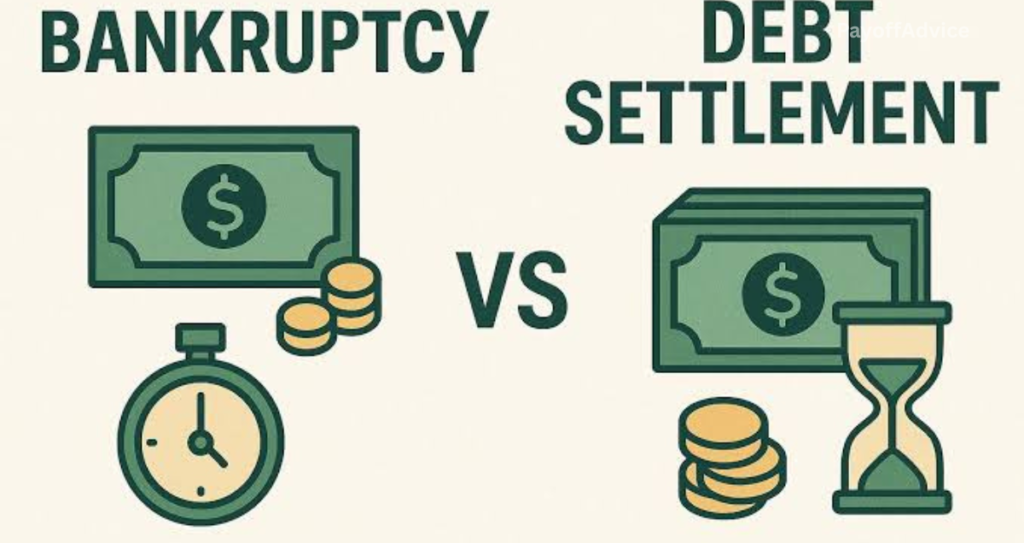
It depends on how much you owe, what kind of debt it is, and whether you can pass the bankruptcy means test. If your debt is mostly unsecured (credit cards, medical bills, personal loans) and you can realistically save enough to offer a lump sum, settlement can cost less overall than years of interest and collections activity, as long as you budget for the tax bill on any forgiven amount over $600. If your debt is unmanageable relative to your income, or you’re already behind on multiple accounts and facing lawsuits, Chapter 7 bankruptcy often resolves the debt faster and for a fraction of the cost, since attorney and filing fees are a one-time expense rather than a percentage of your balance. Chapter 13 makes sense if you don’t qualify for Chapter 7 but have steady income to fund a repayment plan while keeping key assets.
Before You Choose: Consider These Alternatives First
Both settlement and bankruptcy carry lasting credit consequences, so it’s worth ruling out less damaging options first. If you can still make minimum payments, comparing a debt consolidation loan vs. a balance transfer card can lower your interest rate without the credit hit of settlement or bankruptcy. If your debt is manageable but disorganized, the debt snowball or avalanche method can get you out of debt on your own timeline. For an unbiased breakdown of every debt relief option, including nonprofit credit counseling, the Consumer Financial Protection Bureau’s debt collection resource center is a solid, free starting point before you sign anything.
Frequently Asked Questions
Is debt settlement better than bankruptcy?
Neither is universally “better.” Settlement can cost less and keep you out of court, but takes years and isn’t guaranteed. Bankruptcy resolves debt faster and more completely, but carries a longer-lasting credit report mark and may affect certain assets.
How much does debt settlement cost?
Most companies charge 15% to 25% of the enrolled or settled debt, though some charge up to 35%. Fees are only collected after a settlement is reached, per FTC rules, and some programs add monthly account fees of $5 to $15.
Does debt settlement hurt your credit score more than bankruptcy?
Generally no. Bankruptcy causes a larger, faster drop (100-200 points) than settlement (typically 100+ points), and it stays on your report longer. Settlement’s damage is smaller but still significant, especially for people who started with good credit.
Can I do debt settlement myself without a company?
Yes. You can negotiate lump-sum settlements directly with creditors, which avoids the 15%-35% fee that settlement companies charge. It takes more time and negotiating effort, but many people successfully settle debts on their own.
What is the difference between Chapter 7 and Chapter 13 bankruptcy?
Chapter 7 liquidates and discharges most unsecured debt within months but requires passing a means test. Chapter 13 restructures debt into a 3-to-5-year repayment plan and is typically used by those who earn too much for Chapter 7 or want to protect an asset.
Will forgiven debt from a settlement be taxed?
Usually yes. The IRS generally treats forgiven debt over $600 as taxable income, and the creditor will send a 1099-C form. Debt discharged in bankruptcy, by contrast, is not treated as taxable income.
How long does debt settlement take?
Most debt settlement programs take 24 to 48 months to settle all enrolled accounts, though some people finish in just over two years depending on how much they can save toward lump-sum offers.
How long does bankruptcy stay on my credit report?
Chapter 13 bankruptcy stays on your credit report for seven years from the filing date. Chapter 7 bankruptcy stays for ten years, since no debt repayment is required.
Can creditors still sue me during debt settlement?
Yes. Debt settlement offers no legal protection, so creditors can continue collection calls or file lawsuits while you’re saving toward a settlement. Bankruptcy’s automatic stay is the only option that legally halts most collection activity immediately.
Which option should I choose if I have $20,000+ in unsecured debt?
At that level, compare your monthly income against the bankruptcy means test first. If you’d qualify for Chapter 7 and have few non-exempt assets, it’s often the faster, cheaper route. If you don’t qualify or want to avoid bankruptcy on principle, settlement or a debt management plan may be worth pursuing instead.