Debt Management & Credit
How to Negotiate Medical Debt: A Step-by-Step Guide
About 41% of U.S. adults carry medical or dental debt. Here’s a step-by-step guide to negotiate medical debt down, from itemized bill requests to settlement scripts.


If you’re staring at a bill you can’t afford, you’re far from alone. Learning how to negotiate medical debt is one of the most valuable financial skills in America right now, since medical bills are rarely fixed and providers routinely accept less than the amount originally billed. Here’s a step-by-step process for reducing what you owe, whether the bill just arrived or it’s already gone to collections.
How Common Is Medical Debt in 2026?
Medical debt is far more common than most people realize. According to KFF’s national survey data, about 41% of U.S. adults currently carry some form of medical or dental debt, whether it’s on a credit card, in a payment plan, owed to family, or sitting in collections. The Consumer Financial Protection Bureau separately reports that roughly 15 million Americans have medical debt showing on their credit reports. KFF also estimates Americans collectively owe at least $220 billion in medical debt, with about 14 million people owing more than $1,000. A more recent 2026 KFF survey found 28% of adults said they or a family member had trouble paying for health care in the prior 12 months, and people with lower incomes are disproportionately affected.
Step 1: Request an Itemized Bill
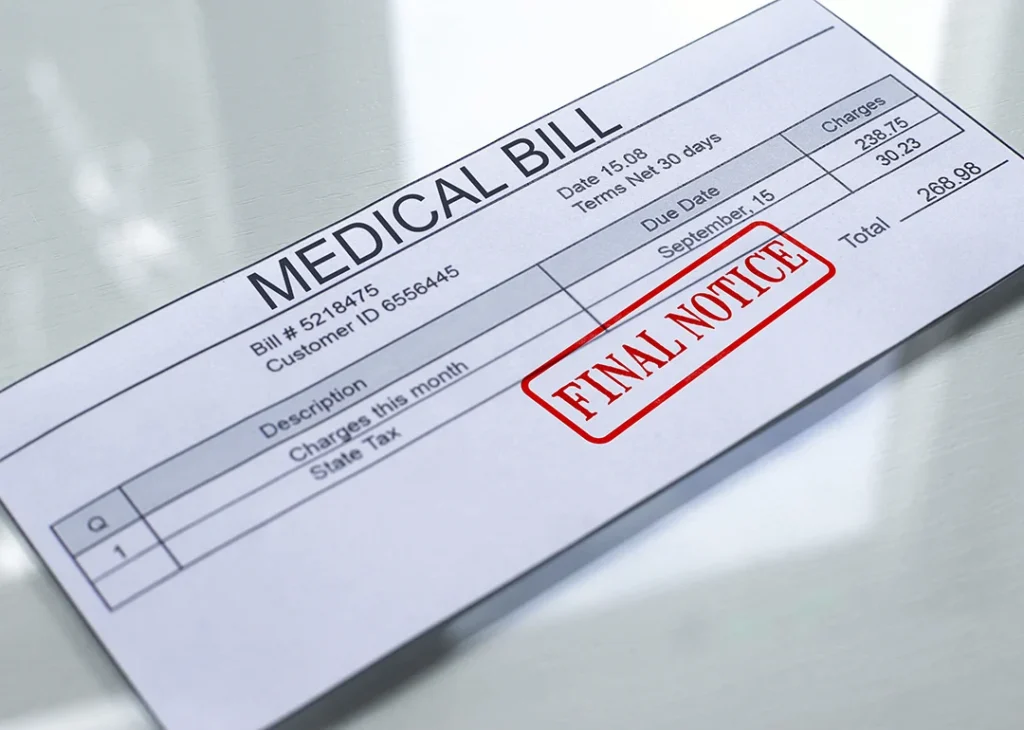
Before paying or negotiating anything, ask the billing department for a fully itemized statement. Medical bills frequently contain duplicate charges, incorrect codes, or services you never received. Reviewing the itemized version, not just the summary total, is often the fastest way to find an error that lowers your balance without any negotiation at all.
Step 2: Verify the Debt and Check for Errors
Compare the itemized bill against your insurance explanation of benefits (EOB) to confirm your insurer processed the claim correctly and that you’re being billed only for your actual responsibility, such as your deductible or coinsurance. If the provider is out-of-network for emergency or certain hospital-based care, protections under the No Surprises Act may limit what they can bill you directly.
Step 3: Ask About Financial Assistance or Charity Care
Most nonprofit hospitals are legally required to offer a financial assistance or charity care program, and many for-profit hospitals and clinics offer similar programs voluntarily. Ask the billing department directly whether you qualify based on income, and request the application in writing. This step alone can reduce or eliminate a bill entirely for lower-income patients, so it’s worth doing before negotiating a settlement.
Step 4: Negotiate a Lump-Sum Settlement
If you can pay a portion of the bill upfront, ask the billing office if they’ll accept a reduced lump-sum payment to close the account. Hospitals and medical providers often accept 40% to 60% of the original balance in exchange for immediate, guaranteed payment, since it saves them the cost and uncertainty of collections. Always get the reduced amount and confirmation that the account will be marked paid in full in writing before sending payment.
Step 5: Set Up an Interest-Free Payment Plan
If a lump sum isn’t realistic, most providers will set up a monthly payment plan, and unlike credit cards, medical payment plans through the provider are frequently interest-free. This avoids the trap of putting a medical bill on a high-interest credit card, which turns a fixed, negotiable bill into open-ended, compounding debt.
Step 6: Get Everything in Writing
Whatever you negotiate, whether it’s a reduced settlement, a payment plan, or an approved financial assistance application, request written confirmation before making a payment. This protects you if the account is later sold to a collection agency or if there’s a dispute about what was agreed to.
Step 7: Know Your Credit Reporting Rights
Recent rule changes have removed many medical collection accounts under $500, or those that were paid in full, from credit reports altogether, which is part of why CFPB’s credit-report figures are lower than KFF’s broader survey estimates. If a paid or small medical debt is still showing on your report, you can dispute it directly with the credit bureaus.
What If the Debt Already Went to Collections?
You still have leverage. Collection agencies typically purchase medical debt for a small fraction of its face value, which means they often have significant room to negotiate a reduced settlement. Never make a payment over the phone without getting the agreed settlement amount in writing first, and always negotiate before your first payment, since making a partial payment can sometimes restart the statute of limitations on old debt depending on your state.
Avoiding the Credit Card Trap
It’s tempting to swipe a credit card to make a medical bill disappear immediately, but this usually converts a negotiable, often interest-free medical balance into high-interest revolving debt. If you already have medical debt sitting on a credit card, the strategies in our guide to paying off credit card debt fast can help you attack that balance methodically, and choosing between the debt snowball or debt avalanche method can help you prioritize it alongside any other balances you’re carrying.
Frequently Asked Questions
Can you actually negotiate medical bills?
Yes. Hospitals and medical providers routinely accept less than the original billed amount, especially for lump-sum settlements or through financial assistance programs.
How much can you typically save by negotiating medical debt?
Providers often accept 40% to 60% of the original balance for an immediate lump-sum payment, though the exact amount depends on the provider and your financial circumstances.
What percentage of Americans have medical debt?
About 41% of U.S. adults currently carry some form of medical or dental debt, according to KFF’s national survey data.
Does medical debt hurt your credit score?
It can, though recent rule changes have removed many medical collection accounts under $500, or those paid in full, from credit reports entirely.
Should I put medical debt on a credit card?
Generally no. Medical payment plans through the provider are often interest-free, while credit cards charge high interest, turning a negotiable bill into more expensive, compounding debt.
What is charity care?
Charity care is a financial assistance program, often legally required at nonprofit hospitals, that reduces or eliminates medical bills for patients who qualify based on income.
Can medical debt be negotiated after it goes to collections?
Yes, and often more aggressively, since collection agencies typically buy medical debt for a small fraction of its face value and have room to accept a reduced settlement.
Should I get a settlement agreement in writing?
Always. Written confirmation protects you if the account is later disputed, resold, or reported incorrectly to a credit bureau.
Does paying off medical debt in collections improve my credit immediately?
It depends. Newer scoring models and reporting rules treat paid medical collections more favorably, but the impact on your specific score can vary by which bureau and model is used.
How many Americans owe more than $1,000 in medical debt?
KFF estimates about 14 million people, or roughly 6% of adults, owe more than $1,000 in medical debt.