Debt Management & Credit
Buy Now, Pay Later and Your Credit Score: What You Need to Know in 2026
Buy now pay later loans can now affect your credit score. Here’s how FICO’s new BNPL scoring model works and how to use BNPL without hurting your credit in 2026.


Buy now, pay later loans and your credit score used to live in two completely separate worlds. You could open five Klarna installment plans in a single week and your FICO score would not move an inch, for better or worse. That changed in late 2025. FICO now offers credit scores that factor in BNPL activity, Affirm has started reporting payment history to the credit bureaus, and nearly half of American adults now use these loans regularly, according to LendingTree’s 2026 Buy Now, Pay Later Report. If you use Klarna, Affirm, Afterpay, or PayPal’s Pay in 4, understanding how buy now pay later credit score reporting actually works in 2026 is no longer optional.
How Many Americans Are Using BNPL in 2026
Nearly half of Americans, 47%, say they have used a buy now, pay later service, including 10% who have done so six or more times, LendingTree’s June 2026 survey found. Adoption skews young and skews toward higher earners: 61% of Gen Zers ages 18 to 29 and 59% of people earning six figures a year have used BNPL at least once. PayPal is the most widely used provider at 56% of BNPL users, followed by Affirm at 45%, Klarna at 41%, and Cash App Afterpay at 33%. BNPL is also no longer just for discretionary purchases — clothing and tech remain the top categories, but 29% of BNPL users have now used the loans to buy groceries, more than double the 14% recorded two years ago.
The Big Shift: FICO Now Scores Buy Now, Pay Later Loans
For most of BNPL’s existence, the four-payment, six-week loans that Klarna, Afterpay, and PayPal popularized simply were not reported to Equifax, Experian, or TransUnion, so they had no effect on your credit score. That started to change in June 2025, when FICO announced FICO Score 10 BNPL and FICO Score 10 T BNPL, the first mainstream credit scores built specifically to incorporate BNPL repayment data. The new scores launched for lender use in fall 2025 and are offered alongside standard FICO scores at no extra cost, giving lenders a fuller picture of how you actually manage short-term credit. FICO’s own simulations show most consumers will see a swing of roughly plus or minus 10 points, similar to the effect of opening any new account.
How BNPL Can Hurt Your Credit Score
If a BNPL provider reports to the bureaus and you pay late, that missed payment can now be treated much like a missed credit card payment once it is 30 days past due. Affirm began reporting loan activity to credit bureaus in 2025, while Klarna and Afterpay have moved more cautiously, so your exposure depends on which app you use. The bigger risk is volume. LendingTree found that 63% of BNPL users have carried multiple loans at once, and 25% have held three or more simultaneously — a habit known as loan stacking. Because BNPL debt is often invisible to traditional underwriting until it is reported, stacking several loans can quietly strain your debt-to-income ratio and your credit profile at the same time.
How BNPL Can Actually Help Your Credit Score
The same reporting shift that creates risk also creates opportunity, particularly for people with thin or no credit files. Because FICO Score 10 BNPL rewards consistent, on-time repayment, using BNPL responsibly and paying every installment on schedule can help establish a payment history where a traditional credit card application might otherwise be denied. This matters most for younger consumers and anyone working to improve their credit score fast, since BNPL loans are generally easier to qualify for than most credit cards. The catch is that the benefit only exists if your provider actually reports to a bureau, so check your BNPL app’s terms rather than assuming it does.
The Hidden Costs: Late Fees, Loan Stacking, and Overspending
Even when a missed payment does not touch your credit score, it can still cost real money. A December 2025 Consumer Financial Protection Bureau report put the average BNPL transaction at $135 and the average late fee at $9.99. Late payments themselves are becoming more common: LendingTree found that 47% of BNPL users paid late at least once in the past year, up from 41% in 2025 and 34% in 2024. The psychological cost may matter even more — 68% of BNPL users agree the loans cause them to overspend, and 54% say they have regretted a BNPL purchase, up from 48% a year earlier. Perhaps most telling, 54% of BNPL users say they would not be able to make ends meet without these loans, including 59% of millennials and 62% of parents with young children.
Which BNPL Apps Report to the Credit Bureaus
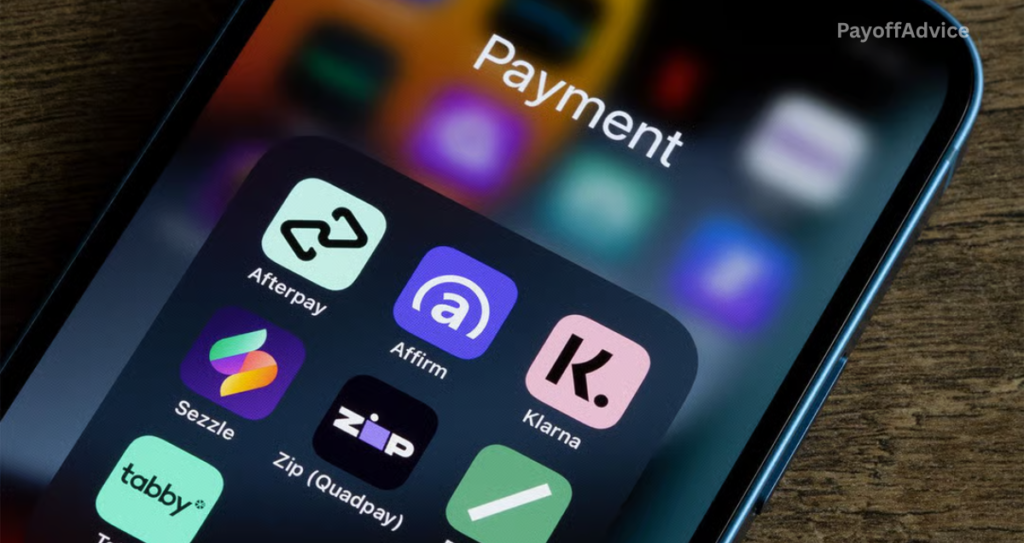
Reporting practices vary by provider and are changing quickly, so always check directly with your lender before assuming your loan is invisible to your credit file. As of 2026, Affirm reports many of its longer-term, interest-bearing loans to credit bureaus and has expanded reporting since 2025. Klarna and Afterpay have historically reported less consistently, focusing mainly on delinquent accounts sent to collections rather than every on-time installment. PayPal’s Pay in 4 has also moved toward broader reporting as FICO’s new scoring models create pressure across the industry. The safest assumption in 2026 is that any BNPL loan could eventually show up on your credit report, whether through direct furnishing or a collections referral after a missed payment.
How to Use Buy Now, Pay Later Without Hurting Your Credit
A few habits make the difference between BNPL as a useful budgeting tool and BNPL as a credit score liability. Stick to one active loan at a time rather than stacking multiple plans across different apps, since juggling several biweekly due dates is the single biggest driver of missed payments. Treat every BNPL installment like a bill with a fixed due date, and consider autopay or a calendar reminder so a payment never slips 30 days past due, the point where damage to your credit becomes likely. Before financing a purchase, ask whether you would put it on a credit card if BNPL were not available; if the honest answer is no, that is a sign you may be using BNPL to stretch a budget rather than to manage cash flow. Finally, if you do pay late, call the provider. LendingTree found that 88% of BNPL users who asked for a late fee waiver got it reduced or eliminated entirely, so a quick call can undo some of the financial damage even if it cannot undo a bureau report. Used deliberately, one loan at a time with payments tracked closely, BNPL can be a manageable part of your financial toolkit rather than a hidden threat to your credit score.
Frequently Asked Questions
Does buy now pay later affect your credit score?
It can. Since fall 2025, FICO Score 10 BNPL and FICO Score 10 T BNPL incorporate buy now, pay later repayment data, so on-time or late payments can now move your score if your provider reports to the credit bureaus.
What is FICO Score 10 BNPL?
It’s a credit score FICO launched in 2025 that factors in buy now, pay later loan activity alongside traditional credit accounts, giving lenders a fuller view of how you manage short-term credit.
Does Affirm report to credit bureaus?
Yes. Affirm began reporting many of its loans, especially longer-term and interest-bearing plans, to credit bureaus in 2025 and has expanded that reporting since.
Do Klarna and Afterpay report to credit bureaus?
They have historically reported less consistently than Affirm, often reporting delinquent accounts sent to collections rather than every on-time payment, though this is changing as FICO’s new scoring models take hold.
Can a missed BNPL payment hurt my credit score?
Yes, if your provider reports to a bureau and the payment is roughly 30 days or more overdue, it can be treated similarly to a missed credit card payment.
Will paying BNPL loans on time improve my credit score?
It can, particularly for people with thin credit files, since FICO Score 10 BNPL rewards consistent on-time repayment much like it rewards on-time credit card payments.
How many BNPL loans can I have at once?
There’s no hard limit, but 63% of BNPL users have carried multiple loans simultaneously and 25% have held three or more, a pattern linked to higher rates of missed payments.
What happens if I miss a buy now pay later payment?
You’ll typically face a late fee, averaging $9.99 according to a CFPB report, and if the account is reported and stays unpaid long enough, it can also hurt your credit score.
Is buy now pay later bad for your finances?
Not inherently, but 68% of users say it causes them to overspend and 54% say they’ve regretted a purchase, so it works best as a planned tool rather than an impulse option.
Should I stop using buy now pay later in 2026?
Not necessarily. Using one loan at a time, tracking due dates, and confirming whether your provider reports to credit bureaus lets you use BNPL without it becoming a hidden risk to your credit or budget.