Debt Management & Credit
Balance Transfer Credit Cards in 2026: How 0% APR Offers Work and Whether They’re Worth It
How balance transfer credit cards work in 2026: 0% APR offers, transfer fees, current average rates, and how to decide if a transfer is worth it.


Balance transfer credit cards let you move a high-interest balance onto a new card that charges 0% APR for a limited introductory period, buying you months of interest-free breathing room to pay down principal. With the average credit card APR sitting at 22.15% in the second quarter of 2026, according to Federal Reserve data, that interest-free window can be worth hundreds of dollars — but only if you understand the fees, deadlines, and traps that come with it.
What Is a Balance Transfer Credit Card?
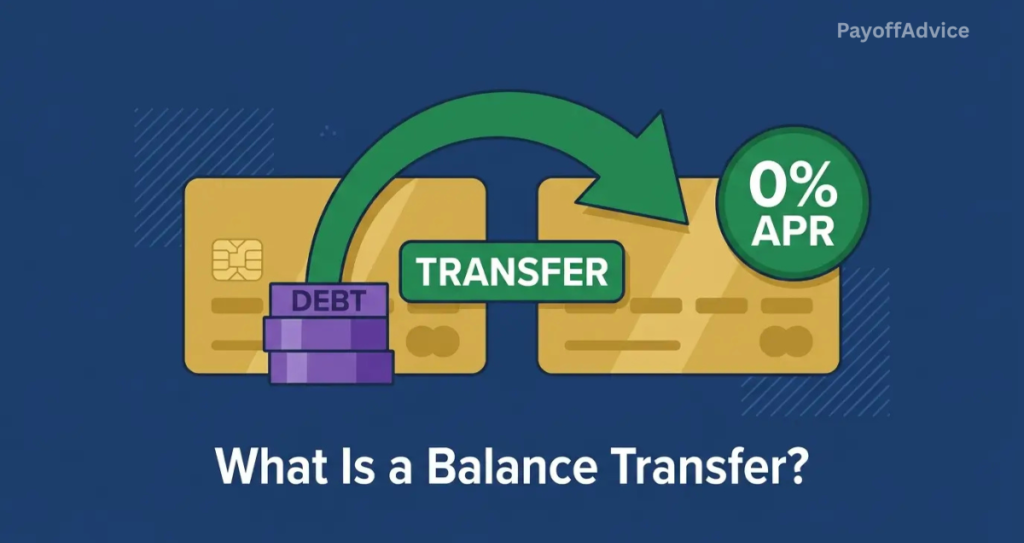
A balance transfer credit card is a card, usually newly opened, that lets you move debt from one or more existing credit cards onto it. Instead of continuing to accrue interest at your old card’s rate, the new card typically offers 0% APR on the transferred balance for a set introductory period, often 12 to 21 months. During that window, every payment you make goes toward the principal instead of interest, which can dramatically shorten your payoff timeline if you don’t add new charges to the balance.
Balance Transfer Rates and Terms in 2026
Credit card debt and interest rates both climbed further in 2026. Americans collectively owed $1.252 trillion in credit card debt in the first quarter of 2026, according to the Federal Reserve Bank of New York’s Quarterly Report on Household Debt and Credit, up 5.9% year-over-year. The average individual cardholder balance reached $6,519, and the average APR on interest-accruing accounts hit 22.15% in Q2 2026, up from 21.52% in Q1, per the Fed’s G.19 consumer credit report.
- Top balance transfer cards in 2026 are offering 0% intro APR for up to 21 months on both purchases and qualifying transfers.
- Once the intro period ends, ongoing variable APRs on these cards typically range from roughly 15% to 28%, depending on your creditworthiness.
- Balance transfer fees usually run 3% to 5% of the transferred amount, or a flat $5, whichever is greater.
- Most issuers require the transfer to be completed within 60 days of account opening to qualify for the promotional rate.
How Much Can a Balance Transfer Actually Save You?
Run the math against the national averages above. A $6,500 balance sitting at 22% APR generates roughly $114 a month in interest if you’re only making minimum payments — money that does nothing to reduce what you owe. Move that same $6,500 to a card with 0% APR for 18 months and a 3% transfer fee ($195), and you could pay it off in equal installments of about $372 a month with zero interest, saving well over $1,500 compared with paying it down at the average card rate over the same period. The savings shrink fast, though, if you can’t clear the balance before the promotional period ends or if you keep charging new purchases to either card.
The Hidden Costs and Risks of Balance Transfers
Balance transfers aren’t free money, and a few details trip people up:
- The transfer fee is charged upfront. A 3% to 5% fee on a large balance can add hundreds of dollars to what you owe on day one.
- Deferred interest isn’t the same as 0% APR. Read the terms carefully; a small number of offers retroactively charge interest from the original transfer date if the balance isn’t paid in full by the deadline.
- New purchases may not get the promo rate. Some cards only apply 0% APR to the transferred balance, not new spending, so new charges can start accruing interest immediately.
- A hard inquiry and a new account can dip your credit score temporarily, and closing the old card afterward can raise your credit utilization ratio if you’re not careful.
- Missing a payment can void the promotional rate entirely on many cards, triggering the standard APR retroactively.
Balance Transfer vs. Debt Consolidation Loan vs. Debt Management Plan
A balance transfer card works best for borrowers with good to excellent credit who can realistically pay off the debt within the promotional window. If your balance is larger than what you can pay off in 12 to 21 months, a fixed-rate debt consolidation loan may offer more predictable monthly payments over a longer term without the risk of a rate spiking back up. If your credit isn’t strong enough to qualify for either option, a nonprofit debt management plan, which negotiates lower rates directly with creditors, is usually the next best route.
How to Qualify for the Best Balance Transfer Offers
Issuers reserve the longest 0% periods and lowest fees for applicants with good to excellent credit, generally a FICO score of 690 or higher. Before applying, check your current credit utilization and pull your free credit report to correct any errors. If your score needs work first, tackling that is often more valuable than chasing a marginal card offer — see our guide on ways to lower your credit card interest rate for tactics that also improve approval odds.

Step-by-Step: Executing a Balance Transfer the Right Way
- Compare at least three balance transfer offers for intro length, ongoing APR, and transfer fee.
- Apply and, once approved, initiate the transfer immediately, ideally within the issuer’s required window (often 60 days).
- Divide your balance by the number of promotional months to calculate the fixed payment needed to hit zero before interest kicks in.
- Set up autopay for at least that amount so you never miss a due date and risk losing the promo rate.
- Avoid new charges on either card until the transferred balance is paid off.
- Keep the old account open (if it has no annual fee) to preserve your overall credit history length and utilization ratio.
Used with a payoff plan, a balance transfer credit card is one of the few debt tools that can save real money without extending your loan term, sometimes wiping out over a thousand dollars in interest on a mid-size balance. Used without a plan, it just relocates the same debt with an expiration date attached.
Frequently Asked Questions About Balance Transfer Credit Cards
What is a balance transfer credit card?
It’s a credit card that lets you move debt from an existing card onto it, typically with a 0% introductory APR for a set period so your payments go toward the principal instead of interest.
How long do 0% APR balance transfer offers last in 2026?
Most top offers in 2026 run 12 to 21 months, with 18 to 21 months being among the longest available from major issuers.
How much does a balance transfer cost?
Most issuers charge a balance transfer fee of 3% to 5% of the amount transferred, or a flat $5, whichever is greater, billed at the time of the transfer.
Does a balance transfer hurt your credit score?
Opening a new card triggers a hard inquiry, which can temporarily lower your score a few points. However, paying down debt and lowering your credit utilization ratio afterward typically helps your score recover and improve over time.
What happens if I don’t pay off the balance before the promo period ends?
Any remaining balance starts accruing interest at the card’s standard variable APR, which in 2026 typically ranges from about 15% to 28% depending on the issuer and your credit profile.
Can I transfer a balance between cards from the same bank?
Generally no. Most issuers prohibit transferring a balance between two cards issued by the same bank; the new card must come from a different issuer.
Do new purchases get the 0% APR too?
It depends on the card. Some offer 0% APR on both purchases and transfers during the intro period; others apply the promotional rate only to the transferred balance. Check the card’s terms before charging anything new.
Should I close my old credit card after transferring the balance?
Usually not right away. Keeping the old account open, especially if it has no annual fee, helps preserve your credit history length and keeps your overall utilization ratio lower.
What credit score do I need for a balance transfer card?
Most balance transfer cards with the longest 0% periods and lowest fees require good to excellent credit, generally a FICO score of 690 or above.
Is a balance transfer better than a debt consolidation loan?
A balance transfer tends to work better for smaller balances you can pay off within the promotional period. For larger balances or if you want a fixed monthly payment over a longer term, a debt consolidation loan may be a better fit.