Debt Management & Credit
Debt-to-Income Ratio Explained: What Lenders Look For in 2026
Learn what a debt-to-income ratio is, how it’s calculated, and the DTI limits lenders use for mortgages, auto loans, and personal loans in 2026.


Your debt-to-income ratio — often shortened to DTI — is one of the single biggest numbers lenders look at before approving a mortgage, auto loan, or personal loan in 2026. It measures how much of your gross monthly income already goes toward debt payments, and it tells a lender how much room you realistically have to take on more. Understanding your DTI, and knowing the limits lenders actually use, can be the difference between approval and denial, or between a competitive rate and a costly one.
What Is a Debt-to-Income Ratio?
Your debt-to-income ratio is the percentage of your gross (pre-tax) monthly income that goes toward minimum debt payments — things like your mortgage or rent, car loan, student loans, credit card minimums, and personal loan payments. It does not include everyday expenses like groceries, utilities, or insurance premiums unless those are debt obligations.
Lenders care about DTI because it’s a direct measure of how much financial cushion you have. A borrower with a low DTI has more income left over each month to absorb a new payment; a borrower with a high DTI is closer to being overextended.

How to Calculate Your Debt-to-Income Ratio
The formula is straightforward:
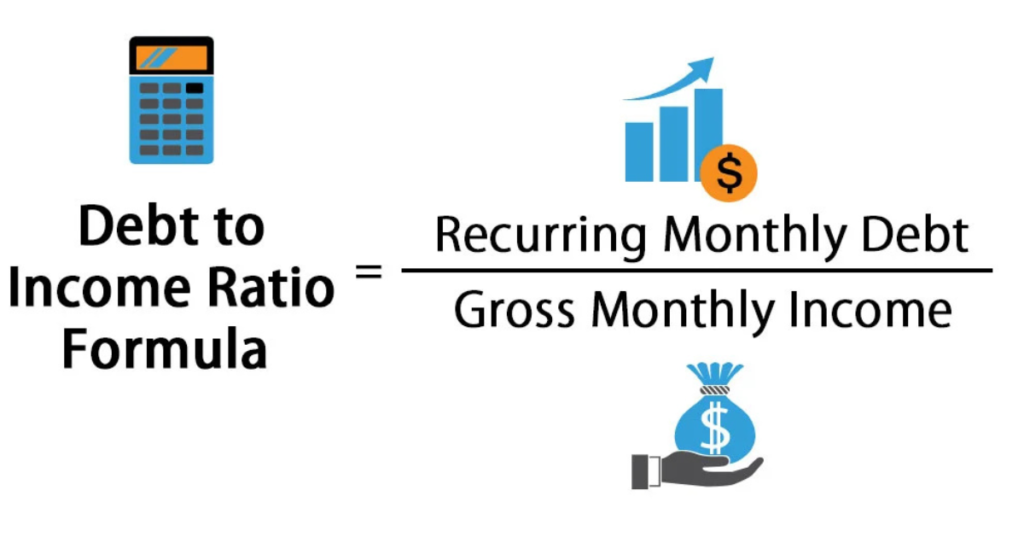
DTI = (Total Monthly Debt Payments ÷ Gross Monthly Income) × 100
For example, if you earn $6,000 a month before taxes and pay $1,800 total toward a mortgage, car loan, and credit cards, your DTI is 30% ($1,800 ÷ $6,000 = 0.30).
Lenders typically look at two versions of this number:
Front-end DTI counts only housing costs (mortgage principal, interest, taxes, insurance, and HOA dues) against income. Back-end DTI counts housing costs plus every other recurring debt payment. Back-end DTI is the figure most lenders weight most heavily.
Debt-to-Income Ratio Limits by Loan Type in 2026
DTI thresholds vary significantly depending on what you’re borrowing for. Here’s how the major loan categories break down this year.
Mortgages: FHA and Conventional Loans
For FHA loans, standard guidelines in 2026 keep front-end DTI near 31% and back-end DTI around 43%. Borrowers with strong compensating factors — solid credit, cash reserves, stable income — can sometimes qualify with a back-end DTI as high as 50%, and in select cases up to roughly 57% (FHA.com).
Conventional loans generally follow Fannie Mae’s guidance: a typical front-end maximum of 36%, with many lenders allowing back-end DTI up to 45%, and as high as 50% for borrowers with excellent credit and strong assets.
Auto Loans
Auto lenders prefer a total DTI below 36%, though approvals are common up to around 45% depending on credit profile. Many lenders also evaluate a payment-to-income (PTI) ratio specifically for the vehicle payment, alongside your overall DTI.
Personal Loans
Most personal loan lenders consider a DTI of 36% or lower ideal, though debt consolidation loans sometimes allow DTI as high as 50% since the loan itself is meant to reduce other debt payments. Most lenders prefer to see DTI under 40% for approval at competitive rates.
Where the Average American Household Stands
Total U.S. household debt reached $18.8 trillion in the first quarter of 2026, up from $14.1 trillion at the end of 2019 — a 32.9% increase in five years (USAFacts). The Federal Reserve’s household debt service ratio, which measures required debt payments as a share of disposable income, stood at 11.2% in Q1 2026, with mortgage payments accounting for 5.9% of that and consumer debt making up the rest. That ratio has climbed steadily from a pandemic-era low of 9.1%, reflecting both higher borrowing costs and rising balances (Federal Reserve).
While the debt service ratio isn’t identical to a personal DTI calculation, the trend line matters: households nationally are dedicating a growing share of income to debt, which makes knowing your own number more important, not less.
What Counts as a “Good” Debt-to-Income Ratio?
As a general rule of thumb across loan types:
36% or below is considered healthy and gives you access to the widest range of loan products and best rates. 37% to 43% is manageable but may limit your options, particularly for mortgages. Above 43% puts you in a range where many lenders will deny an application outright or require a co-signer, larger down payment, or higher interest rate to offset the risk.
How to Lower Your Debt-to-Income Ratio
If your DTI is higher than you’d like, there are two levers: pay down debt, or increase income. On the debt side, prioritizing high-balance or high-payment debts — using a strategy like the debt snowball or debt avalanche method — can meaningfully reduce your monthly obligations within a few months. Consolidating multiple high-payment debts into a single lower-payment loan can also help, provided the new loan doesn’t just stretch the same balance over a longer term at a similar total cost.
On the income side, even modest increases — a side income stream, a raise, or eliminating a dependent monthly subscription-style debt — shift the ratio in your favor. It’s also worth checking your credit report for errors, since a stronger credit profile can help you qualify at a given DTI level even before the ratio itself improves; see our guide on building credit from scratch for the fundamentals.
DTI vs. Credit Score: Why Lenders Use Both
Your DTI and your credit score measure different things. Credit score reflects your payment history and how you’ve managed debt over time. DTI reflects your current capacity to take on more. A borrower can have excellent credit and still get denied for a new loan if their DTI is too high, because the lender isn’t questioning whether you pay your bills — they’re questioning whether you can afford one more payment. That’s why improving your DTI often matters as much as improving your credit score when you’re preparing for a major loan application.
Getting Ready for a Loan Application
Before applying for a mortgage, auto loan, or personal loan, calculate your DTI using the formula above and compare it against the loan-specific thresholds outlined here. If you’re close to a limit, consider paying down a revolving balance or two in the months before you apply — even a modest reduction in monthly debt payments can move you into a stronger approval tier and unlock better pricing.
Frequently Asked Questions
What is a debt-to-income ratio?
A debt-to-income ratio is the percentage of your gross monthly income that goes toward minimum debt payments, including housing costs, car loans, student loans, and credit card minimums. Lenders use it to gauge how much additional debt you can reasonably afford.
How do I calculate my debt-to-income ratio?
Divide your total monthly debt payments by your gross monthly income, then multiply by 100. For example, $1,800 in monthly debt payments divided by $6,000 in gross income equals a 30% DTI.
What is a good debt-to-income ratio?
A DTI of 36% or below is generally considered healthy and gives you access to the best loan terms. Ratios between 37% and 43% are manageable but may limit options, while ratios above 43% often trigger denials or stricter conditions.
What is the maximum DTI for an FHA loan in 2026?
Standard FHA guidelines cap back-end DTI around 43%, though borrowers with strong compensating factors like solid credit and cash reserves can qualify with DTI as high as 50%, and in some cases up to roughly 57%.
What is the maximum DTI for a conventional mortgage?
Most conventional lenders following Fannie Mae guidelines allow a back-end DTI up to 45%, with some approvals as high as 50% for borrowers with excellent credit and strong assets.
Does DTI include rent or only debt payments?
DTI includes housing costs — either your mortgage payment or, in some lender calculations, your rent — along with all other recurring debt payments. It does not include groceries, utilities, or insurance premiums that aren’t tied to a loan.
Does checking my DTI affect my credit score?
No. Calculating your own DTI is just arithmetic using your income and debt payments; it doesn’t involve a credit inquiry and has no impact on your credit score.
What’s the difference between front-end and back-end DTI?
Front-end DTI counts only housing-related costs against your income. Back-end DTI counts housing costs plus every other recurring debt payment, including credit cards, auto loans, and student loans. Lenders typically weight back-end DTI more heavily.
How can I quickly lower my debt-to-income ratio?
Pay down high-payment debts first, avoid taking on new financed purchases before a loan application, and consider consolidating multiple payments into one lower monthly obligation. Increasing income, even modestly, also improves the ratio.
Can I get a loan with a high debt-to-income ratio?
It’s possible but harder. Some lenders offer programs for higher-DTI borrowers, often with a co-signer, larger down payment, or higher interest rate to offset the added risk. Reducing your DTI before applying generally leads to better terms.